
How Much Wind Can a Commercial Tent Withstand?
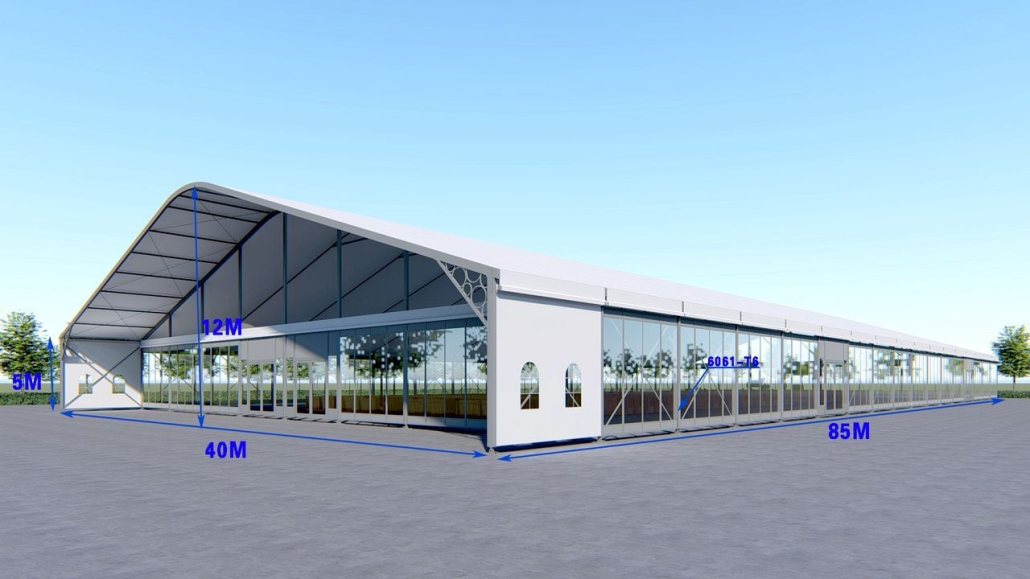
Commercial tents are designed to provide reliable shelter for outdoor events, business functions, exhibitions, weddings, festivals, and temporary workspaces. However, one of the most important factors to consider before installing a tent is its ability to withstand strong winds.
So, how much wind can a commercial tent withstand? The answer depends on the tent’s design, size, construction materials, anchoring system, installation quality, and local weather conditions. While some engineered commercial tents are designed for substantial wind loads, smaller pop-up tents may need to be taken down much earlier when wind speeds increase.
In this guide, we explain commercial tent wind ratings, the factors that affect wind resistance, and the safety measures you should take to protect your tent, equipment, and guests.
How Much Wind Can a Commercial Tent Withstand?
There is no single wind speed that applies to every commercial tent. Each model has its own design specifications and maximum permitted operating wind speed.
For example, some commercial event tents are rated for sustained winds of approximately 80–100 km/h when correctly installed and anchored. However, these figures are examples, not universal safety limits. Actual ratings vary by manufacturer, tent configuration, and installation conditions. Source: Element Event Solutions
Smaller pop-up tents, promotional canopies, and lightweight gazebos may have significantly lower wind limits. They should never be assumed to have the same wind resistance as a professionally engineered commercial marquee.
Before using any commercial tent in windy conditions, check the manufacturer’s documentation for its design wind load, maximum operating wind speed, and anchoring requirements.
What Factors Affect a Commercial Tent’s Wind Resistance?
Several factors determine how well a commercial tent performs when exposed to strong winds.
1. Tent Size and Design
The size and shape of a commercial tent influence how wind pressure acts on its structure. Larger tents generally expose more surface area to the wind, potentially increasing the loads on the frame, fabric, and anchoring points.
A professionally engineered large event tent may offer greater structural stability than a small, lightweight canopy, but size alone does not determine strength.
Clear-span marquees, frame tents, industrial shelters, and promotional tents all have different structural characteristics. Always choose a model designed for the intended application and local weather conditions.
2. Frame and Construction Materials
The materials used to manufacture a commercial tent play an important role in its durability.
Heavy-duty aluminium and steel frames can provide structural strength when properly engineered. Reinforced joints, quality connectors, tensioned fabric, and durable fasteners also contribute to overall stability.
However, strong materials alone do not guarantee wind resistance. The complete structure must be designed to handle the expected wind loads, including the forces transferred through the frame and anchoring system.
3. Anchoring and Ballast
Proper anchoring is one of the most important factors in commercial tent wind resistance.
Even a well-built tent can become unstable if its legs are inadequately secured. Wind can create horizontal forces and uplift that may move the structure, pull out stakes, or cause anchoring points to fail.
Depending on the tent design and installation surface, suitable anchoring methods may include:
- Ground stakes or engineered ground anchors.
- Approved ballast weights.
- Concrete or other suitable anchoring systems.
- Manufacturer-specified straps, ropes, and tensioning equipment.
The required anchoring method and weight depend on the tent’s engineering specifications, ground conditions, and expected wind loads. Do not rely on generic weight recommendations for every tent.
4. Installation Quality
Correct installation is essential for achieving the tent’s intended performance.
A tent with loose connections, poorly tensioned fabric, missing braces, or incorrectly installed anchors may be less stable than the manufacturer intended.
Commercial tents should be assembled by trained personnel who understand the manufacturer’s instructions. Before use, inspect the frame, connectors, fabric, guy ropes, and anchoring points for signs of damage or improper installation.
5. Sidewalls and Wind Direction
Sidewalls can change how wind moves around and through a tent. Depending on the configuration, they may increase pressure on the structure and uplift forces acting on the anchors.
Wind direction also matters. A tent may experience different loads when the wind strikes its broad side compared with when it travels along its length.
Never assume that closing or removing the sidewalls will automatically make a tent safer. Follow the manufacturer’s instructions for the specific structure and wind conditions.
How Different Types of Commercial Tents Perform in Wind
Commercial tents are available in several designs, each intended for different applications and operating conditions.
Pop-Up Commercial Tents
Pop-up tents are popular for trade shows, outdoor markets, promotional campaigns, and small events. They are convenient to assemble but generally have lighter frames than large engineered event structures.
Their wind resistance depends on the model, anchoring method, and manufacturer specifications. Avoid using a lightweight pop-up tent in strong or gusty winds unless its documented rating explicitly permits the conditions.
Frame Tents
Frame tents use a structural framework to support the roof and fabric. They are commonly used for exhibitions, catering areas, outdoor functions, and temporary commercial spaces.
Their ability to withstand wind depends on the frame design, span, bracing, anchoring, and installation. A frame tent is not automatically windproof simply because it has a rigid structure.
Clear-Span Commercial Marquees
Clear-span marquees provide large, unobstructed interior spaces suitable for corporate events, weddings, exhibitions, and temporary facilities.
Engineered clear-span structures can be designed for specified wind loads, making them suitable for a range of applications. However, their permissible operating wind speed must be confirmed for the exact model and configuration.
Industrial Storage Tents
Industrial storage tents are used for temporary warehousing, equipment protection, logistics, and construction operations.
Because these structures may remain installed for extended periods, wind resistance and site-specific engineering are particularly important. The design should account for local wind conditions, anchoring requirements, exposure, and the intended duration of use.
How Wind Speed Affects Commercial Tent Safety
Wind speed is an important indicator of risk, but the effect of wind on a tent is not always intuitive.
Wind pressure increases approximately with the square of wind speed. This means that, under comparable conditions, doubling the wind speed can produce roughly four times the wind pressure.
For example, increasing wind speed from 30 km/h to 60 km/h can produce approximately four times the wind pressure. Actual forces on a tent also depend on its shape, orientation, surrounding environment, and exposure.
This is why a tent that appears stable in moderate winds may become unsafe as conditions worsen.
It is also important to distinguish between sustained wind speeds and short, powerful gusts. A tent may be exposed to sudden gusts that exceed the average speed reported in a weather forecast.
For safety, monitor local weather forecasts and use the maximum operating wind speed specified for your particular tent. Do not wait until the structure visibly begins to move before taking action.
How to Keep a Commercial Tent Secure in Windy Conditions
Following appropriate safety procedures can reduce risks during installation and operation.
Choose the Right Tent for Your Location
Before purchasing or hiring a commercial tent, consider the local climate, expected wind conditions, ground surface, and intended use.
If the tent will be installed in an exposed location or remain in place for an extended period, request documentation confirming that it is suitable for the expected conditions.
Secure Every Anchoring Point
Install all required stakes, ballast, braces, and tensioning equipment according to the manufacturer’s instructions.
Check that the ground can support the anchoring system and that no components are missing or damaged. A secure-looking installation is not necessarily an adequately engineered one.
Monitor Weather Conditions
Check weather forecasts before installation and throughout the event. For larger structures, a suitable on-site wind-measuring device can help operators monitor changing conditions.
Establish clear wind thresholds for increasing inspections, suspending activities, evacuating occupants, and taking other protective action. These thresholds should be based on the tent’s documented limits and the event’s safety plan.
Inspect the Tent Regularly
Look for loose straps, slack ropes, damaged fabric, moving poles, shifting ballast, and other signs of instability.
If you notice significant movement or structural damage, stop using the tent and keep people away from the affected area. Do not attempt repairs or adjustments while the structure is exposed to dangerous winds.
Have an Emergency Weather Plan
Every outdoor event using a commercial tent should have a plan for severe weather.
The plan should identify who monitors weather conditions, who makes the decision to stop activities, how occupants will be evacuated, and where people should go for shelter.
If winds approach or exceed the tent’s permitted operating limit, follow the manufacturer’s emergency procedures and evacuate as required. Never attempt to hold down, dismantle, or re-anchor a tent while conditions are unsafe.
What Is the Maximum Safe Wind Speed for a Commercial Tent?
The maximum safe wind speed depends on the specific structure and its approved operating conditions.
A manufacturer’s design wind speed is not necessarily the same as the maximum wind speed permitted while people are occupying the tent. Some structures may require restrictions, reinforcement, evacuation, or dismantling before their design wind load is reached.
The relevant documentation should identify the applicable design criteria, operating limits, and anchoring requirements. Local building regulations and event safety requirements may also apply.
For this reason, avoid relying on a general statement such as “all commercial tents can withstand 60 mph winds.” Such a claim could be misleading and unsafe.
Instead, ask the supplier for the wind rating of the exact tent model, confirmation of the approved installation method, and clear guidance on what to do when the wind limit is approached.
Frequently Asked Questions
Can a commercial tent withstand 40 mph winds?
Some professionally engineered commercial tents may be designed to operate in winds of this strength, while other tents may not be suitable. The answer depends on the specific model, anchoring, site conditions, and manufacturer’s operating limits. Check the documented rating before using the tent.
Are heavy-duty commercial tents windproof?
No commercial tent should be assumed to be completely windproof. Heavy-duty construction can improve durability and structural performance, but every tent has limitations. Correct installation, suitable anchoring, and weather monitoring remain essential.
Do tent weights prevent a commercial tent from blowing away?
Appropriate ballast can help resist movement and uplift when it is part of an approved anchoring system. However, insufficient or incorrectly positioned weights may not provide adequate protection. Follow the manufacturer’s requirements for the specific tent and surface.
Should I remove the sidewalls when it gets windy?
Not necessarily. Removing sidewalls may reduce some wind loads in certain configurations, but it can also change the pressure distribution and structural behaviour. Follow the manufacturer’s instructions rather than making changes based on assumptions.
What should I do if strong winds are forecast during an event?
Review the tent’s operating limits and your event’s weather safety plan. Monitor forecasts, stop activities and evacuate occupants when required, and arrange any necessary securing or dismantling only when conditions are safe for the trained crew.
Conclusion
So, how much wind can a commercial tent withstand? The answer depends on its design, construction, anchoring system, installation quality, and operating environment. Some engineered commercial tents can withstand substantial wind loads, while lightweight pop-up models may have much lower limits.
The best way to ensure safe use is to select a tent designed for your application, install it correctly, follow the manufacturer’s documented wind limits, and prepare for changing weather conditions.
Looking for a reliable commercial tent for your next project or event? Choose a supplier who can explain the tent’s specifications, anchoring requirements, and operating limits so you can make an informed decision.
WE GOT YOU. CONTACT US.

Leave a Reply
Want to join the discussion?Feel free to contribute!